Solar Inverter Error Codes? Here is How to Fix Them Fast
 Admin
Admin
5 Clear Signs Your Solar Battery is Dying (And How to Fix It)
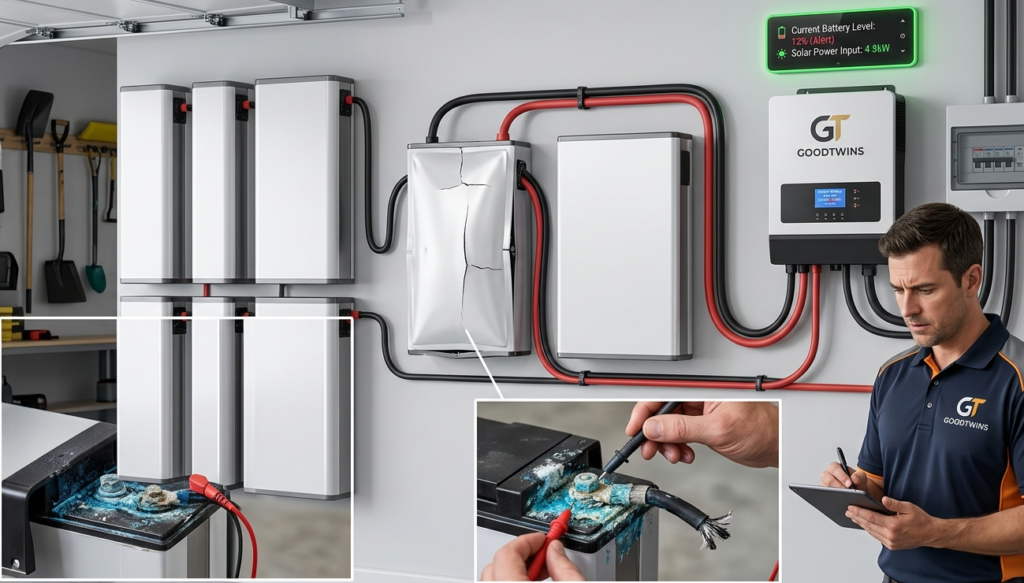
Investing in a solar energy system is a brilliant move for both your wallet and the planet. However, the heart of that system—the solar battery—doesn’t last forever. If your battery is struggling, your entire energy independence is at risk.
Recognizing the warning signs early can save you from a total system failure and expensive emergency replacements. Here are five clear indicators that your solar battery is on its last legs and what you can do to address them.
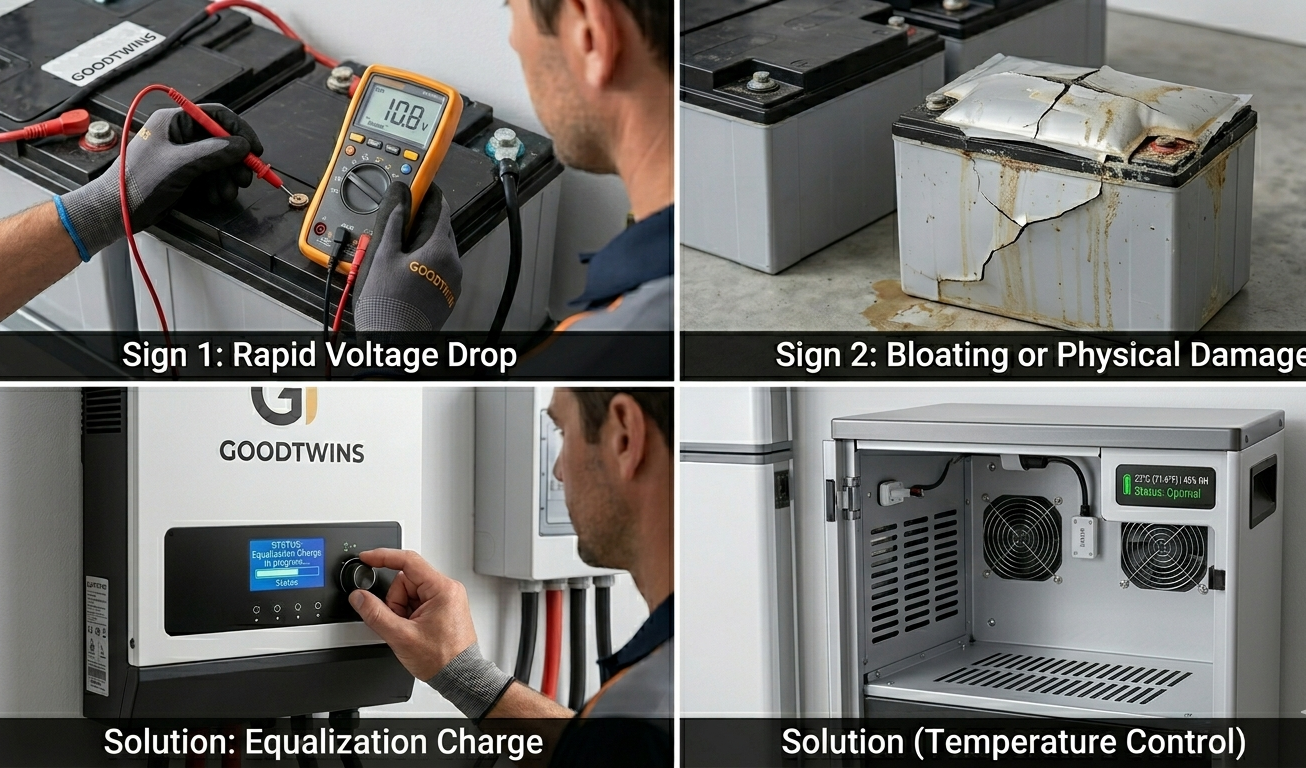
1. Rapid Voltage Drop
One of the most technical but telling signs of a dying battery is a rapid voltage drop. If you notice your battery’s voltage plummeting the moment a load is applied (like turning on a microwave or a TV), the internal resistance of the battery has likely increased.
A healthy battery should maintain a steady voltage and decrease gradually as it discharges. If it drops from a “full” reading to “low” within minutes of use, the cells can no longer hold a stable charge.
2. Bloating or Physical Damage
You don’t always need a voltmeter to spot trouble; sometimes, your eyes are enough. Physical bloating or a “swollen” appearance is a critical red flag, particularly for lead-acid or lithium-ion batteries.
This usually happens due to overcharging or exposure to extreme heat, causing gas buildup inside the casing. If the battery looks misshapen or has cracks, it is not only dying—it is a safety hazard.
3. Short Backup Time
Do you remember when your battery could power your home through the entire night, but now it barely lasts until 10:00 PM? A significant decrease in runtime is the most common symptom of a battery reaching the end of its life cycle.
As batteries age, they lose their “depth of discharge” capacity. Even if the monitor says 100%, the actual amount of energy stored is only a fraction of what it used to be.
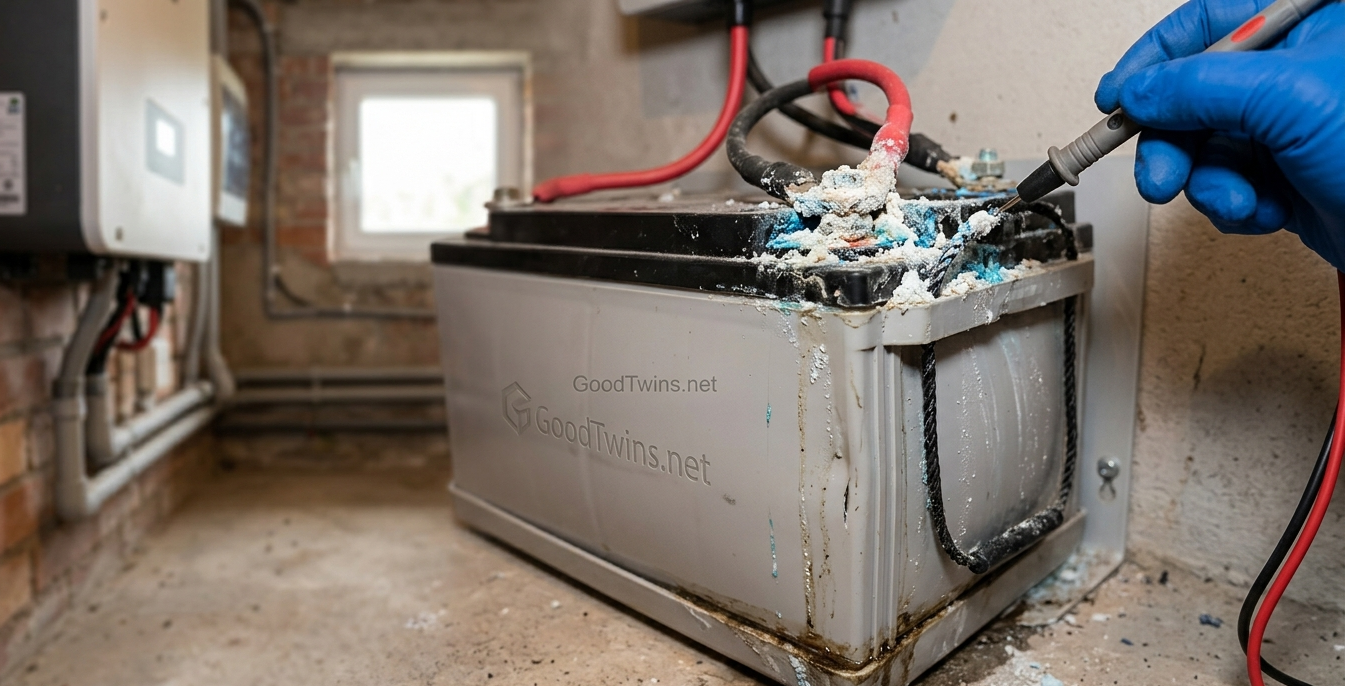
4. Corrosion on Terminals
While some minor buildup is normal, excessive or recurring corrosion (white, ashy, or blue-green powder) on the battery terminals can signal internal leaks or overheating.
Corrosion creates resistance, preventing the solar panels from properly charging the battery and stopping the battery from delivering power to your inverter. If cleaning the terminals doesn’t fix the performance issues, the damage may be internal.
5. Battery Not Reaching Full Charge
If your solar panels are soaking up the sun all day, but your battery status never hits 100%, you have a problem. This often indicates that one or more cells inside the battery are “dead” or short-circuited. These dead cells act as a bottleneck, preventing the rest of the battery from reaching a full state of charge.
How to Extend Your Solar Battery Life
If your battery is showing early signs of wear, you might be able to squeeze more life out of it with these maintenance tips:
- Temperature Control: Keep your batteries in a cool, ventilated area. Extreme heat is the #1 killer of battery chemistry.
- Perform an Equalization Charge: For flooded lead-acid batteries, a controlled overcharge (equalization) can help remove sulfate buildup on the plates.
- Check Connections: Ensure all cables are tight and clean. Loose connections cause heat and inefficiency.
- Depth of Discharge (DoD) Management: Avoid draining your battery to 0%. Setting your inverter to disconnect at 20% or 50% (depending on the battery type) can significantly prolong its lifespan.
Healthy vs. Dying Battery: Quick Comparison
| Feature | Healthy Battery | Dying Battery |
| Voltage Stability | Steady under load | Drops sharply when used |
| Physical Shape | Flat sides, no leaks | Bloated, swollen, or cracked |
| Backup Time | Lasts as rated | Significantly shortened |
| Charging | Reaches 100% efficiently | Struggles to reach full charge |
| Terminals | Clean and shiny | Covered in heavy corrosion |
Conclusion: Don’t Wait for a Blackout
Your solar battery is a workhorse, but it requires regular check-ups to stay efficient. By catching these five signs early, you can plan for a replacement on your own terms rather than being left in the dark during a power outage.
Regular maintenance is the key to getting the highest return on your solar investment. If you suspect your battery is failing, consult with a professional to test your cells and ensure your home stays powered by the sun for years to come.