5 Shocking Reasons Your Solar Panels Are Producing Less Power
 Admin
Admin
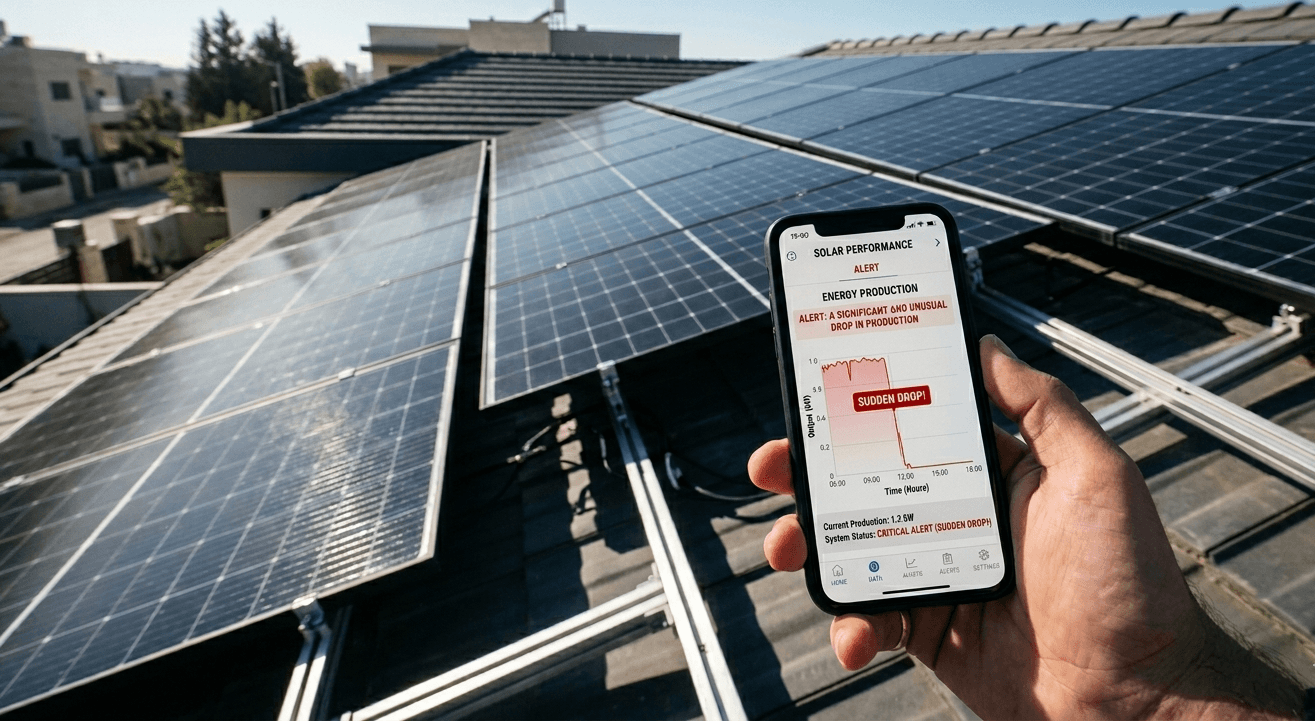
You invested in solar to watch your energy bills vanish, but lately, the numbers aren’t adding up. Despite those sunny afternoons, your production meter is stalling, and your utility bill is creeping back up.
Most homeowners assume a drop in output means a cloud or some dust, but the reality is often more technical—and more “invisible.” As a renewable energy consultant, I’ve seen systems lose 20% of their ROI due to issues the average installer forgets to mention.
Here are the five shocking reasons for your solar panel efficiency loss and what you can do to reclaim your power.
1. Micro-Cracks: The Invisible Fractures
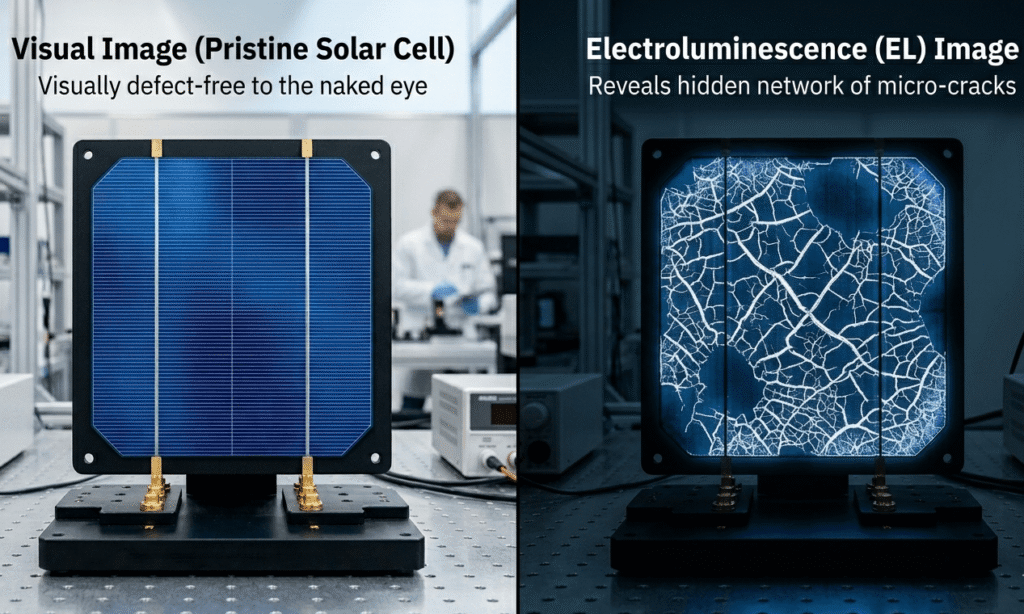
Your panels look pristine from the ground, but at a microscopic level, they might be shattered. Micro-cracks are tiny fractures in the silicon cells caused by thermal expansion, heavy snow loads, or even poor handling during installation.
These cracks act like a “toll booth” on a highway, slowing down the flow of electrons. Over time, these fractures expand, leading to “dead zones” where no power is produced at all.
Pro-Tip for Healthier Cells
- The Drone Check: Hire a professional using thermal imaging cameras.
- Heat Mapping: These cameras identify “cold spots” in cells that indicate where micro-cracks have severed the electrical circuit.
2. The PID Effect: The “Silent Killer” of Voltage
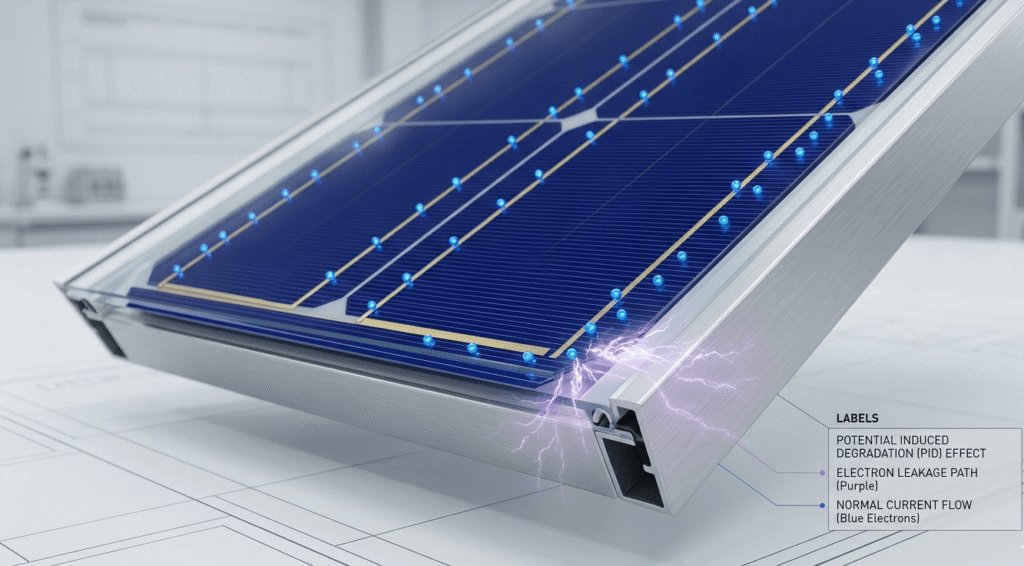
Potential Induced Degradation (PID) is a phenomenon where the voltage potential of the panel leaks into the aluminum frame. It is often triggered by high humidity and temperature, causing a massive solar output drop that can reach up to 30%.
It is called the “silent killer” because it doesn’t show physical symptoms. It simply saps the voltage right out of the system before it ever reaches your home.
How to Combat PID
- Check Your Grounding: Ensure your system is properly grounded to mitigate voltage leakage.
- PID Boxes: You can install “PID recovery” devices that reverse the polarization at night, essentially “healing” the panels while the sun is down.
3. Inverter Clipping: When the “Brain” Is Too Small
You might have 10kW of panels, but if your inverter is only rated for 7kW, you are experiencing inverter clipping. During peak sunlight hours, your panels produce more energy than the inverter can process, so it “clips” the excess and throws it away as heat.
While some clipping is normal for system design efficiency, an aging or undersized inverter will significantly cap your total yield.
Troubleshooting Your Inverter
- Monitor Peak Hours: Check your monitoring app at noon. If the production graph looks like a flat plateau instead of a curve, you’re losing power to clipping.
- Ventilation: Ensure your inverter is in a shaded, cool area; heat causes the “brain” to throttle its own performance.
4. The Irony of the Temperature Coefficient
It sounds counterintuitive, but solar panels actually hate extreme heat. Every panel has a temperature coefficient, typically around -0.3% per degree Celsius.
Once the panel surface exceeds 25°C (77°F), its efficiency begins to plummet. On a blistering summer day, your panels might be 20% less efficient than they would be on a crisp, sunny winter morning.
Pro-Tips for Heat Management
- Airflow is King: Ensure there is at least a 4-inch gap between your roof and the panels to allow for natural convection.
- Avoid “Skirt” Attachments: While they look sleek, they often block the very airflow needed to keep your cells cool.
5. Chemical Shadowing & Hot Spots
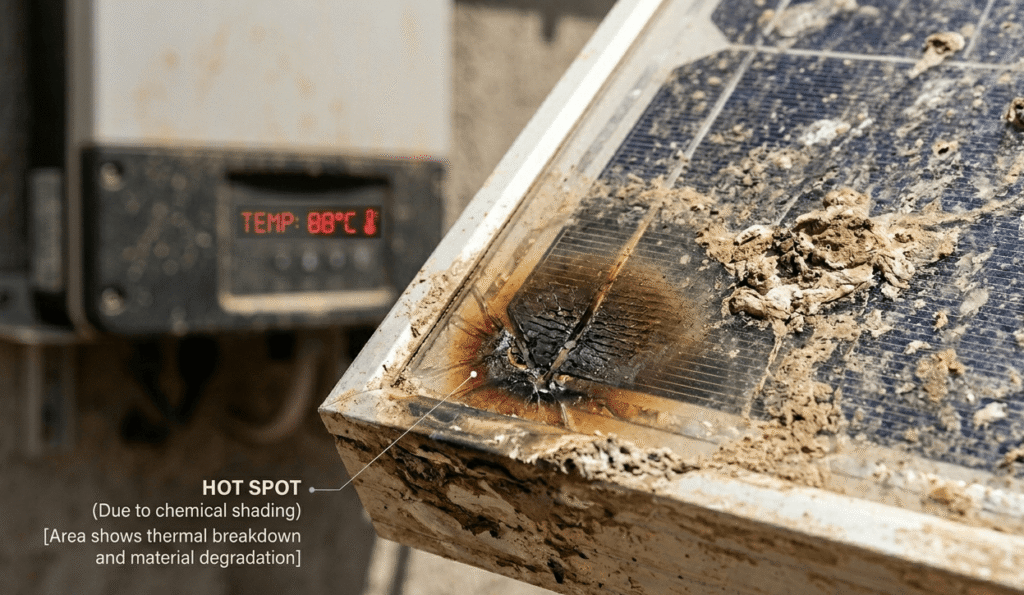
We all know about dust, but “soiling” goes deeper. Bird droppings or dried sap create chemical shadowing. Because cells in a panel are often wired in a series, one dark spot doesn’t just lower that cell’s output—it creates high electrical resistance.
This resistance generates intense heat, leading to “hot spots” that can permanently “burn” the laminate and cause long-term solar panel degradation.
Maintenance Best Practices
- Soft Wash Only: Never use a pressure washer; it can cause the micro-cracks mentioned earlier.
- Deionized Water: Use deionized water to prevent mineral buildup (calcium) which creates its own layer of “glass shading.”
Is Your System Underperforming?
A drop in production is rarely a mystery; it’s usually a symptom of a technical bottleneck. If your “free” energy is starting to feel expensive, don’t wait for the problem to worsen.
Perform a system health check today. Contact a certified technician to run a string-level diagnostic and ensure your investment is actually working for you, not against you.