
How to Clean Solar Panels: 10 DIY Tips to Avoid Scratches in 2026
 Abdulrahman
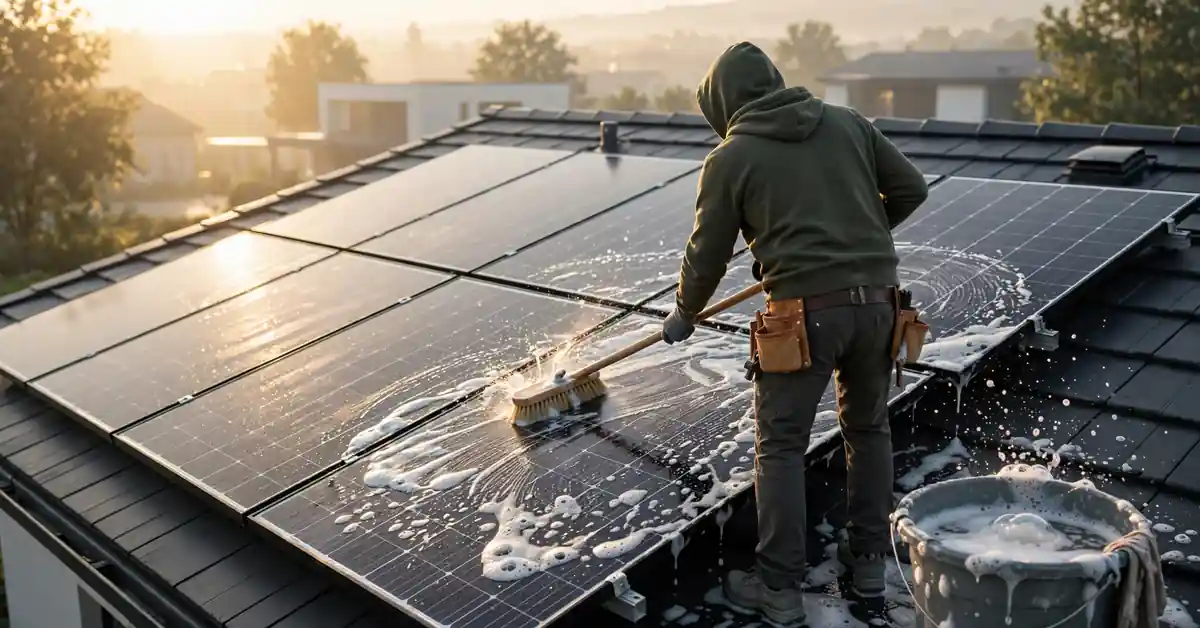
A thin layer of dust, pollen, or bird droppings can reduce solar production by 15-25%. However, scrubbing with the wrong tools can scratch the anti-reflective coating and cause permanent efficiency loss. Proper technique protects both output and warranty.
Why Scratches Matter
Solar panels have a thin anti-reflective coating, only a few microns thick, that helps trap sunlight. A scratch scatters light instead of letting it reach the cells. Micro-scratches accumulate over time and permanently reduce efficiency.
Unlike window glass, solar glass has a textured coating and should be cleaned with softer tools, less pressure, and filtered water.
Cleaning Difficulty by System Type
| System Type | Typical Location | Cleaning Difficulty | Recommended Frequency |
|---|---|---|---|
| Grid-Tied Rooftop | Roof | Medium – Ladder safety needed | Every 2-3 months |
| Off-Grid Ground Mount | Ground, farm | Easy – Waist height | Every 1-2 months, more in dusty areas |
| Hybrid with Battery | Roof + battery | Medium – Avoid battery wiring | Every 2-3 months |
| Portable / RV Solar | Van, RV | Very easy but fragile | After every trip |
Rooftop systems, which account for about 80% of residential installs, should be cleaned from the ground with an extension pole when possible to avoid roof fall risk.
Benefits vs. Drawbacks of Regular Cleaning
Benefits:
- Recovers 15-25% lost production – $150-$400 per year for a 6kW system.
- Prevents hot spots – Dirt holds moisture and heat that degrades cells.
- Maintains warranty – Most manufacturers require basic maintenance; neglect can affect claims.
- Early problem detection – Cleaning reveals cracked glass, loose wiring, or pest nests.
Drawbacks:
- Must be done early morning or evening when panels are cool. Midday panels reach ∼150°F, causing rapid evaporation and spots.
- Roof work has fall risk. Steep roofs should be left to professionals.
- Hard tap water leaves calcium spots. Distilled or de-ionized water is required in hard water areas.
Cost and ROI in 2026
Professional cleaning: $150-$350 per visit for a 15-20 panel residential system. Twice per year = $300-$700 annually.
DIY kit (one-time purchase):
- Soft-bristle solar brush with 12ft extension pole: ∼$35
- Rubber squeegee with soft edge: ∼$12
- 2x microfiber cloths 400 GSM: ∼$10
- 1 gallon distilled water + biodegradable soap: ∼$10
Total first year: ∼$67-$75. Subsequent years: ∼$10 for soap and water.
ROI example (6kW system in Texas, 9,000 kWh/year, $0.16/kWh):
20% soiling loss = 1,800 kWh = $288 lost per year. Recovering that with a $72 DIY cost yields $216 net gain year one, and higher thereafter. It also avoids panel replacement cost from scratch damage.
What You Need for Scratch-Free Cleaning
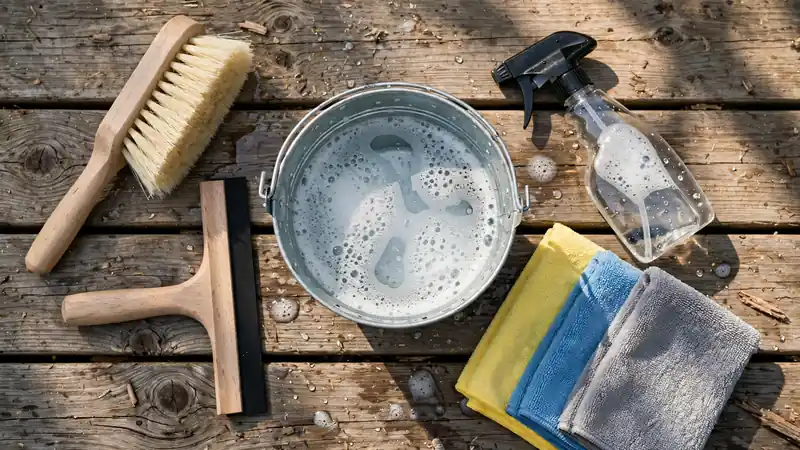
- Long-handled soft-bristle brush labeled “solar panel” or “non-abrasive” with feathered tips
- Bucket of lukewarm distilled water with 3-4 drops of mild dish soap – no Windex, ammonia, or harsh chemicals
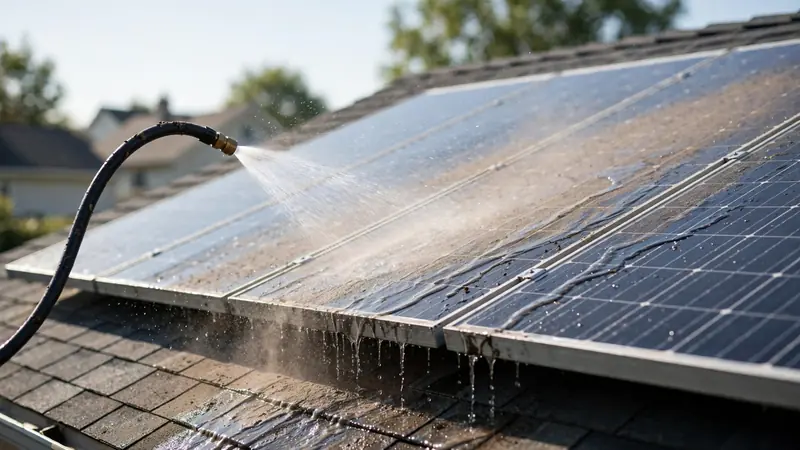
- Garden hose with gentle nozzle – never a pressure washer
- Rubber squeegee and 400 GSM microfiber cloths
- Rubber-soled shoes, gloves, safety glasses
- Extension ladder or pole – never step on panels
Clean at 7-8 AM or after 6 PM when panels are cool. Wet the ground below to prevent slipping.
10 Tips to Clean Without Scratching
1. Rinse First, Always
Never wipe a dry panel. Dust acts like sandpaper. Flood panels with low-pressure water for 60 seconds to lift grit.
2. Use Distilled or De-Ionized Water
Hard tap water over 100 ppm leaves mineral spots that bake on. Use distilled water or an RV filter.
3. Use the Two-Bucket Method
One bucket soapy distilled water, one clean rinse water. Clean, then rinse brush in clean water before reloading. Prevents dragging grit back.
4. Choose a Solar-Safe Soft Brush
Press bristles against your hand. If it scratches skin, it will scratch coating. A flow-through brush that feeds water through the bristles is ideal.
5. Let Gravity Do the Work
Use light, straight strokes top to bottom. No circular scrubbing, no pressure. Let soapy water dissolve debris for 2-3 minutes.
6. Soak Bird Droppings, Don’t Scrape
Spray spot, lay wet microfiber over it for 5 minutes to soften, then wipe with zero pressure.
7. Use a Squeegee to Dry, Not a Towel
Towels can trap grit. Hold squeegee at 30-degree angle, pull gently, wipe blade clean after each pass with microfiber.
8. Clean When Cool and Cloudy
Hot glass + cold water risks micro-cracks from thermal shock and causes rapid drying and spots.
9. Never Use These
Pressure washers, Windex/ammonia, scouring pads, steel wool, harsh detergents, car wax, Magic Erasers. All damage anti-reflective layer or force water into junction boxes and void warranty.
10. Light Microfiber Buff Only
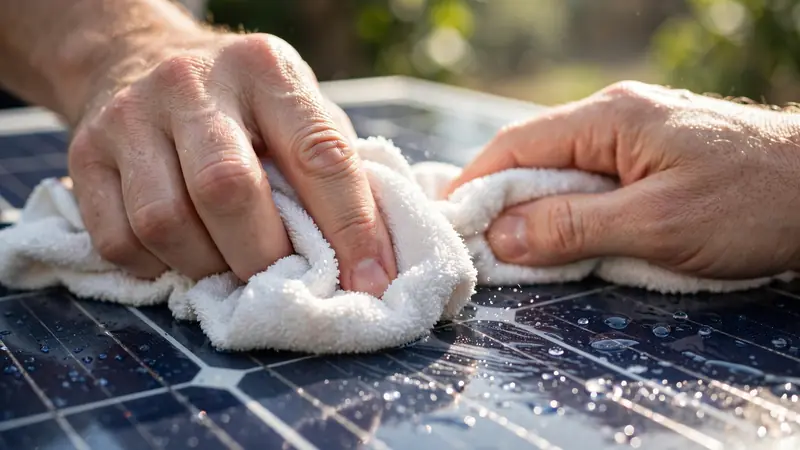
For remaining spots, lay dry 400 GSM microfiber flat and drag with its own weight. No pressure. If spot remains, re-wet and repeat.
5 Mistakes to Avoid
1. Cleaning at noon in summer. Risk of burns and thermal shock. Schedule for early morning.
2. Using a pressure washer. Forces water into junction box, peels sealant, voids warranty.
3. Scrubbing dry dust. Causes swirl marks. Always pre-rinse at least 60 seconds or use low leaf blower first.
4. Using hard tap water in Arizona, California, Texas. Leaves white crust. A $15 TDS meter helps; if tap >100 ppm, use distilled.
5. Walking on panels. Panels are not rated for body weight and can develop invisible micro-cracks.
Conclusion
Dirty panels reduce monthly savings, but improper cleaning causes permanent loss. Three rules prevent scratches: rinse first, use soft solar-rated tools with distilled water, and let soap do the work. A gentle wash in under an hour can recover 15-25% output.
FAQ
Q1: How often should I clean solar panels?
Every 2-3 months for most homes. Monthly near farms, busy roads, or desert. Up to 4 months if frequent rain. If monitoring app shows 5% drop without clouds, clean.
Q2: Can I use vinegar?
Not recommended. Acidic vinegar can damage aluminum frame and rubber seals over time. Mild biodegradable dish soap in distilled water is safer.
Q3: Does DIY cleaning void warranty?
Gentle cleaning with water, soft brush, and microfiber does not. Pressure washers, harsh chemicals, abrasive brushes, or walking on panels can void it. Check warranty sheet.
Q4: What is the best time of day?
Early morning 6-9 AM or evening after 6 PM when panels are cool. Never when hot from midday sun.

Abdulrahman
Solar troubleshooting expert from Gaza, Palestine. Twin brother and co-founder of GoodTwins. 5+ years installing and fixing inverters, batteries and panels.


